

Many people believe that once a bank charges a fee, the money is gone forever. However, bank fees are often not set in stone. Whether it is an unexpected overdraft charge, a monthly maintenance fee, or a wire transfer cost, these fees can frequently be reversed, especially as a one-time courtesy for a good customer. This guide empowers you with the exact script and strategy to successfully ask your bank to waive those charges.
Step 1: Preparation is Key
Before you pick up the phone or open the secure messaging app, you need to arm yourself with the right information. Customer service representatives deal with frustrated callers all day; being prepared makes their job easier and increases your chances of a successful waiver.
- Identify the exact fee: Know the specific name of the charge (e.g., "Overdraft Fee" or "Monthly Maintenance Fee"), the exact date it was posted, and the dollar amount.
- Know your account history: Note how long you've been a customer and emphasize your loyalty. If you have direct deposit set up or keep a healthy balance, keep that information ready to highlight.
Step 2: Contact the Bank
You have a few options for reaching out. Calling the customer service number on the back of your debit card is often the most effective method because it allows for a human connection. However, many modern banks also allow you to use secure messaging or live chat within their mobile app.
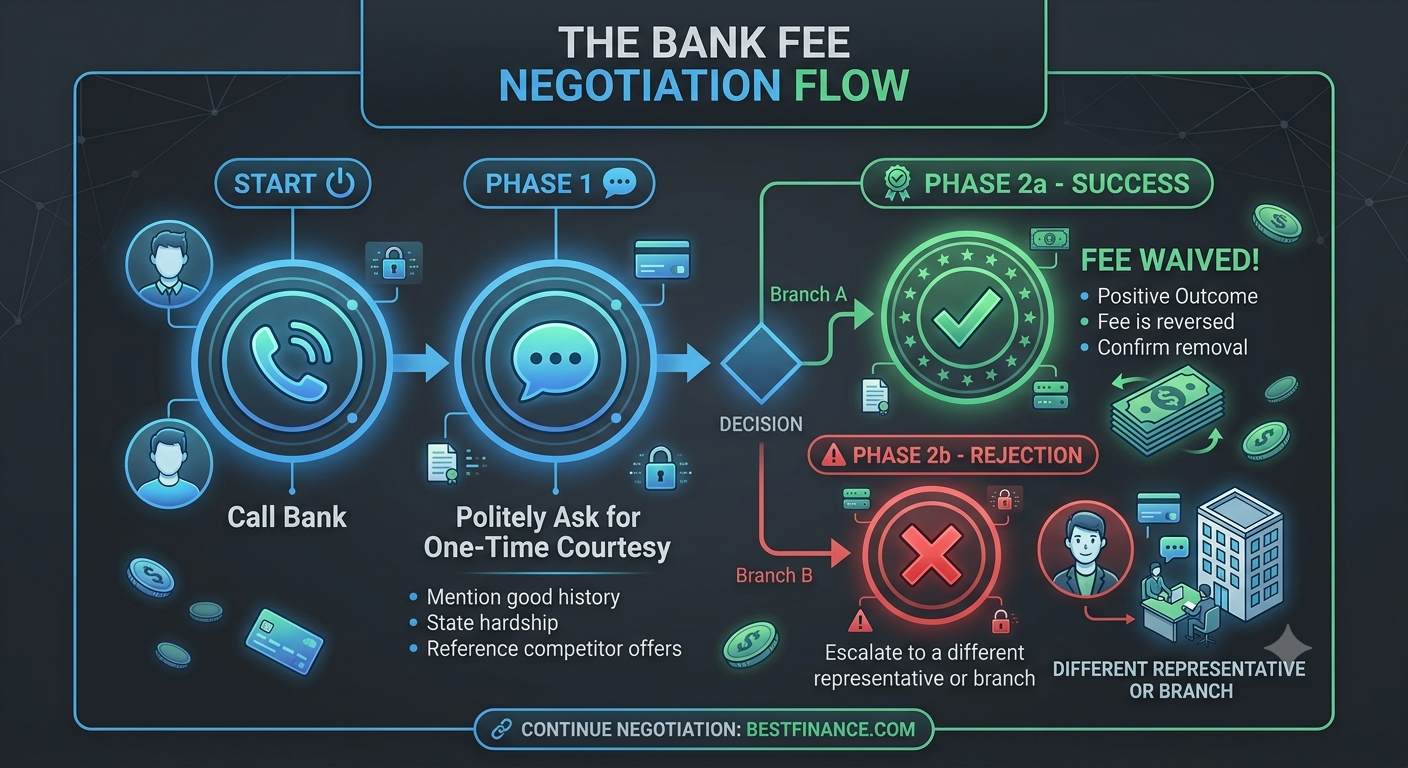
Step 3: The Script - Ask Clearly and Politely
When you connect with a representative, the tone you set is critical. Be polite, direct, and assume positive intent. Do not yell or demand a refund immediately.
The Golden Script
"Hi, I was reviewing my recent statement and noticed a $35 overdraft fee on Tuesday. I’ve been a loyal customer for over five years, and I usually keep my account in good standing. Could you please waive this fee for me as a one-time courtesy?"
Using the phrase "one-time courtesy" gives the representative a policy-approved reason to reverse the charge without feeling like they are breaking the rules.
Step 4: Highlight Your Relationship
If the representative hesitates, politely remind them of your value to the bank. Banks spend hundreds of dollars in marketing just to acquire a single new customer; they do not want to lose you over a $15 or $35 fee.
Mention things like: "I have my paycheck direct deposited here every two weeks," or "I also hold a credit card and an auto loan with you." Reminding them of the depth of your relationship often tips the scales in your favor.
Step 5: If Denied, Try Again
Sometimes you simply get a representative who is having a bad day, or who genuinely doesn't have the system override authority to grant a waiver. If they say no, accept it politely, hang up, and call back a few hours later. A different representative might happily process the refund. Alternatively, walking into a physical branch and speaking to a banker face-to-face can yield excellent results, as it is much harder to say no to a polite customer in person.
Concluding Advice: Avoid Future Fees
Once you get the fee reversed, take steps to ensure it doesn't happen again. Ask the representative, "What can I do to make sure I avoid this specific fee in the future?" They might suggest setting up low-balance alerts, linking a savings account for overdraft protection, or switching to an account tier that doesn't charge monthly maintenance fees.
If your current bank is entirely inflexible and continues to nickel-and-dime you, consider it a sign. The financial industry is highly competitive, and there are countless credit unions, community banks, and online-only banks that offer fee-free checking accounts.